
A Comprehensive Guide to TMS and ECT Therapy
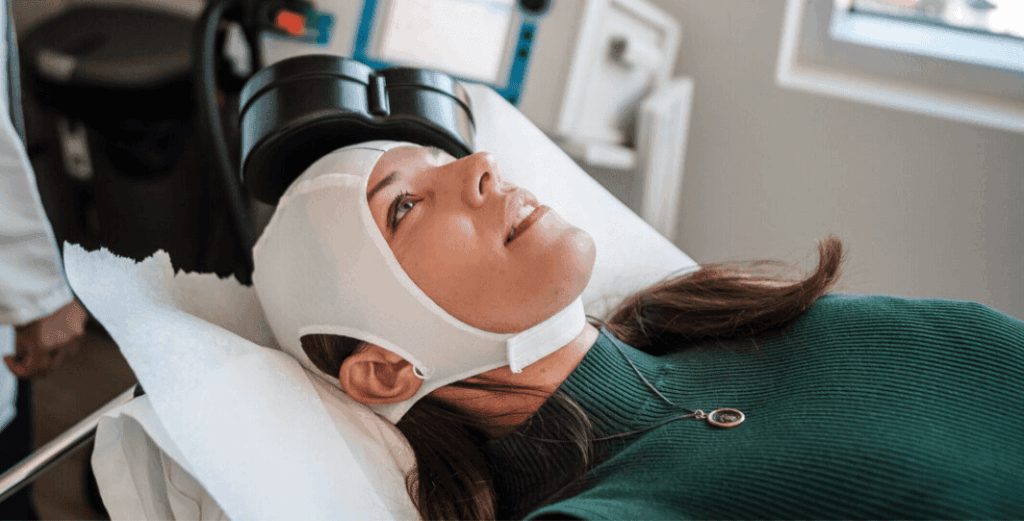
In the realm of depression treatment, there’s no one-size-fits-all approach. Depression manifests differently in individuals, making each treatment plan unique. While some find relief through standard antidepressants and talk therapy on their first attempt, others undergo a trial-and-error process with various medications. Additionally, individuals are grappling with treatment-resistant depression, where conventional methods provide only temporary relief. Fortunately, the landscape of mental health treatment is continually advancing, with researchers exploring alternative approaches to address depression symptoms for those who have exhausted multiple treatments without success. Alternative depression treatments, such as TMS therapy vs. ECT, involve modulating brain activity using electricity. Given that depression often involves reduced brain activity, these brain stimulation therapies aim to essentially “reset” the brain, leading to improvements in symptoms. Tired of temporary relief from depression? Advanced options like TMS and ECT are designed to help when other therapies haven’t worked. Find Supportive Care Now 732-798-7743 What is the Difference Between TMS Therapy vs. ECT? Transcranial Magnetic Stimulation (TMS) is a non-invasive mental health procedure with minimal known side effects. While it is occasionally compared to Electroconvulsive Therapy (ECT), the two treatments i.e. TMS therapy vs. ECT differ in several aspects. Both utilize electrical stimulation to regulate neural activity in the brain, yet they offer distinct advantages and should be considered in different situations. Continue reading to explore the merits and drawbacks of each treatment, and discover how the more recently developed TMS addresses certain concerns associated with its predecessor, ECT. What is TMS Therapy vs. ECT? TMS Therapy vs. ECT, though sharing some similarities, exhibits notable differences. TMS is an outpatient procedure, conducted in a doctor’s office in under 30 minutes, with the patient remaining awake. On the other hand, ECT, typically administered in a hospital, involves sedation under anesthesia and may necessitate an inpatient stay. Electroconvulsive Therapy Transcranial Magnetic Stimulation Administers direct currents to the head to induce a therapeutic seizure. Does not entail the application of direct electrical currents to the patient’s head. Can lead to side effects such as headaches, muscle aches, nausea, etc. Exhibits minimal side effects. Employed for treating severe depression. May be considered as an alternative if the patient does not respond positively to ECT. TMS in Nutshell Transcranial Magnetic Stimulation (TMS), introduced in 1985, is a non-invasive therapy employing magnetic fields to modulate neural activity in specific brain regions associated with mental health conditions like major depressive disorder (MDD) and obsessive-compulsive disorder (OCD). Through repetitive magnetic pulses, TMS has demonstrated the ability to alleviate the frequency and severity of adverse symptoms in these conditions. Patients undergoing TMS treatment often report significant symptom reduction, with up to one in three people achieving full remission from treatment-resistant depression. During a TMS session, patients wear a helmet, and magnetic pulses are directed at precise areas linked to mood control. The sensation is often described as a tapping on the head. Patients are advised to read or watch videos during sessions to boost positive vibes. A typical TMS regimen involves 20- to 30-minute sessions, five days a week for six weeks, followed by a tapering period of three sessions per week for an additional two weeks. Transcranial Magnetic Stimulation (TMS) therapy is typically painless, although some individuals may report a subtle tapping or knocking sensation during the administration of magnetic pulses. Each TMS session lasts around 40 minutes, and the process does not require anesthesia. Many patients describe the experience as relaxing, often choosing to listen to music or even doze off. Presently, there exist two types of Transcranial Magnetic Stimulation (TMS) in the market: traditional TMS and Deep TMS. Traditional TMS Introduced in 1985, traditional TMS, also known as rTMS, employs a handheld device to emit electromagnetic fields and has received FDA clearance for treating depression, migraines, and obsessive-compulsive disorder (OCD). Deep TMS In contrast, the more advanced Deep TMS, available since 2013, addresses various mental health and neurological conditions. Utilizing a cushioned helmet with patented H-Coil technology, Deep TMS distinguishes itself by concurrently reaching broader areas of the brain and directly regulating deeper brain structures. This design overcomes limitations associated with traditional TMS, such as target issues that might cause the device to miss critical brain structures. FDA-cleared for the treatment of depression, OCD, and smoking cessation, Deep TMS represents a technological evolution in TMS therapy with enhanced precision and efficacy. What Are the Side Effects of TMS? The most common side effect of TMS is a temporary mild headache that appears during the session and shortly afterward. Many patients report that this headache usually disappears within the first few weeks of treatment. Other common side effects include: Headache Facial twitching Tingling on the scalp Risk of Seizures Seizures with TMS are extremely rare, with only 0.1% of patients reported to experience them. In some cases, no seizures have been reported at all. Overall, TMS has a very low risk of causing side effects. Mild headaches and temporary scalp discomfort are the most common side effects, and usually resolve shortly after treatment. TMS: Who is this Treatment For? Transcranial magnetic stimulation, or TMS, is effective at reducing symptoms associated with a variety of mental health conditions in a wide variety of people and cases. Its effectiveness extends to people who are new to mental health issues and those who are resistant to other treatments. TMS can also be a useful tool for people who are working on their mental health and are looking for an alternative treatment to psychotherapy or medications. In addition, TMS is safe and effective for people who find ECT (electroconvulsive therapy) to be too harsh for them. Transcranial magnetic stimulation, or TMS, is effective at reducing symptoms associated with a variety of mental health conditions in a wide variety of people and cases. Its effectiveness extends to people who are new to mental health issues and those who are resistant to other treatments. TMS can also be a useful tool for people who are working on their own mental health and are looking for an alternative treatment